
Introduction
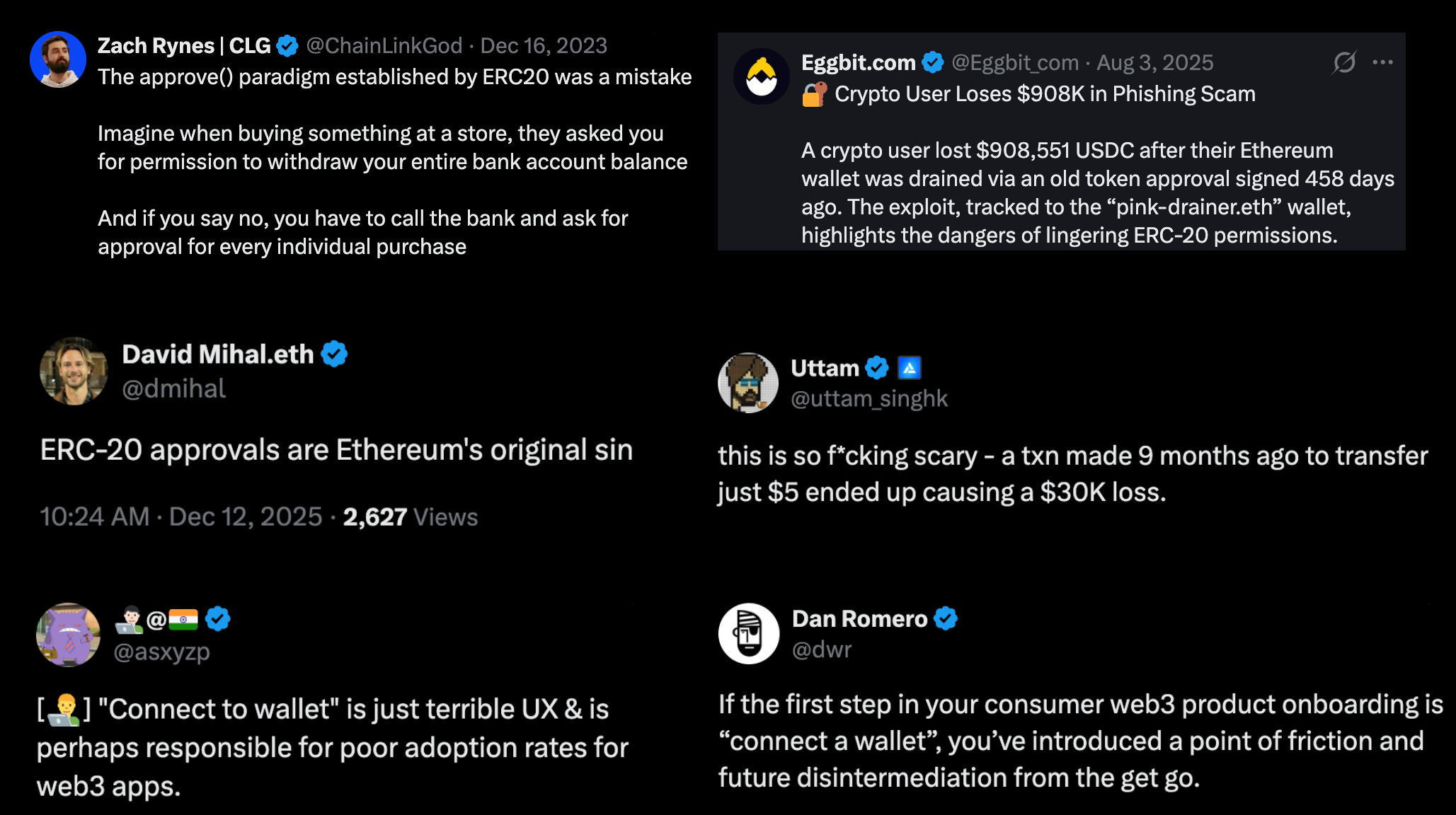
Requiring users to connect their wallets as soon as they open your app, then approving you to pull money from their wallets, has a chilling effect on crypto. The absolute best people I know in crypto have been burned by this. Stuff that should be fun, exciting, and experimental basically can't exist in this environment. When we should be cultivating a space where people create all kinds of weird and interesting things, we've made it so that only well-established big brands feel safe to use.
In-Browser Wallets
One way people have gotten around this is by building in-browser wallets that get created on the fly when you create an account. This may, in spirit, undermine decentralization, but it's a practical approach that addresses these issues and allows people to experiment without constant worry.
The Headless Approach
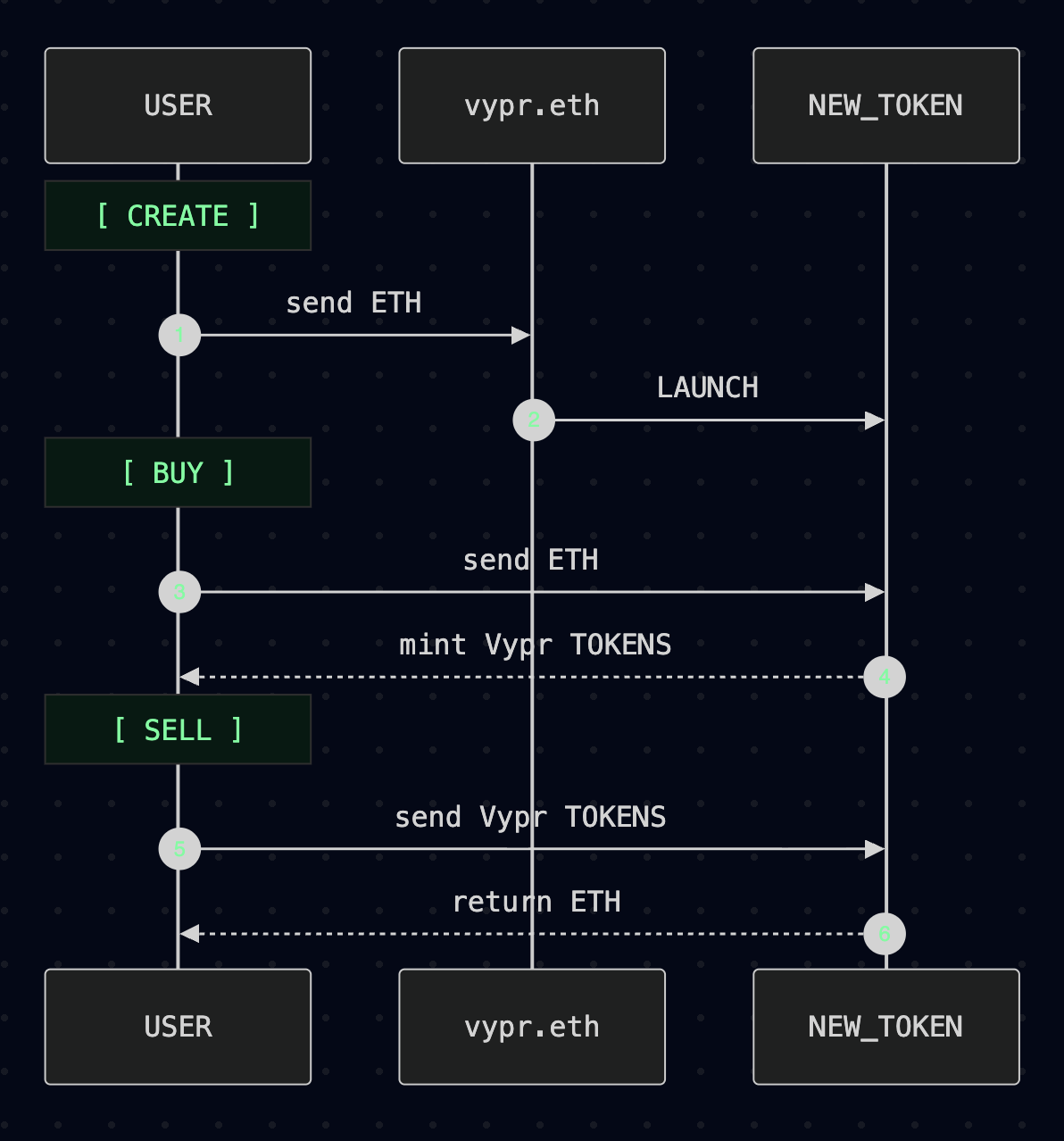
Another approach I'd like to introduce is what I'm calling a "headless" approach: connectionless dapps that work without wallet connections or approvals. The idea is simple: create your apps so people can just send ETH to your contract and get back the thing they want. Send that thing back, get ETH back. No approvals, no signatures, no wallet connections.
One group doing cool stuff with this paradigm is OnThis, which enables bridging and swapping with simple transactions. I understand there are fundamental limitations with this approach, given how Ethereum currently works, so you're somewhat restricted. But I'm not convinced we've pushed it hard enough. I've been told this is how the original ICOs functioned, but I couldn't find much detail on the topic. So I decided to build something.

Introducing Vypr Pad
Vypr Pad is a headless token launchpad. You can launch and trade tokens entirely from within your wallet. No wallet connect, no signatures, no token approvals. Send ETH to vypr.eth to launch a new token. You collect trading fees. Find your token and trading address through the website or a block explorer. People mint and burn your tokens by sending ETH or tokens directly to your contract address.
Domain as UX
Take a moment to consider what this means for UX. You can point your ENS name to the contract address, effectively compressing your app interface to a single domain name. That's the interface. A few characters. People interact with it just by knowing those characters. That's interesting. All the information is on-chain. Anyone can build a different frontend, or skip the launchpad entirely and just build a frontend for their particular token.

Agent-First Design
This should be much easier to script against. It's easier to ask your autonomous commerce agent to send money to your treasury when it reaches a certain threshold. No approvals, no liquidity pools. It's pristine. You can even have agents out in the wild: they find some valuable piece of data, want to sell it via x402, so before they do, they launch a token and begin selling the data. Then they use all the proceeds from that sale to buy into their own curve.
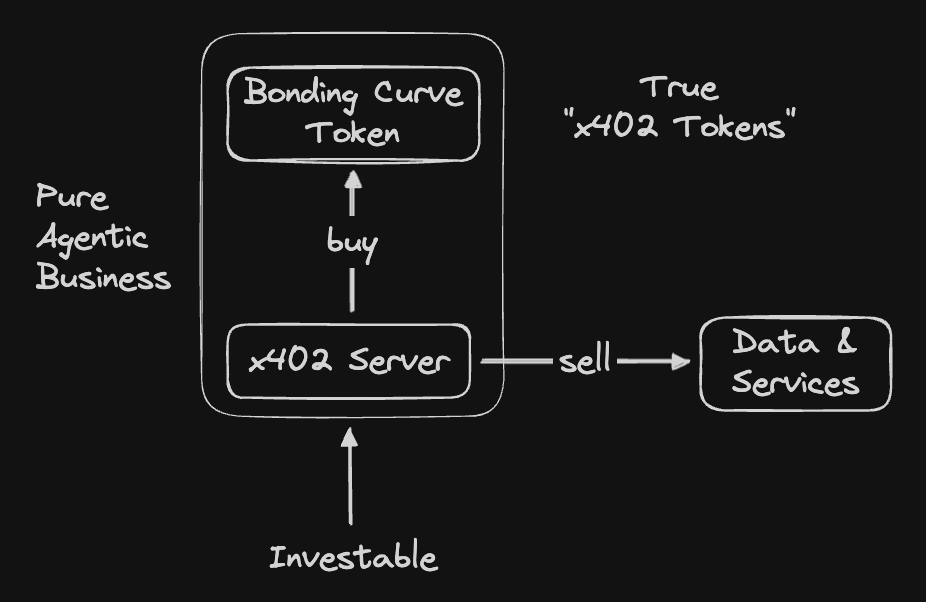
You effectively have public, transparent, digitally native, agentic companies that anyone can buy into. You could guarantee these agents buy into the curve by using Trusted Execution Environments or some other magic. The whole thing is just cool.
Limitations and Next Steps
People much smarter than me, with far more experience in Ethereum, will see the limitations of this approach. You shouldn't initiate new launches from a multi-sig. Things can get weird if you try to make a pool that assumes token approvals. Edge cases exist: gas can get out of control, transactions can revert, and agent interactions can be tricky.
But my hope is that where there's a will, there's a way. This might inspire others to build headless applications and develop interesting workarounds that enable people to trade, stake, vote, post, etc., within this reduced trust model. It would also be cool if it were easier to communicate information back to users within the transaction, so they could easily see what's happening. I'm definitely open to new ideas and to riffing on this if anyone's interested.
There are other primitives I plan to build on top of this that make it even more interesting. Time didn't permit building a graduate-to-DEX feature, but the foundation has been laid, and my goal of launching a POC and something I can start building on for my other projects has been achieved.

Try It Out
Base Sepolia (testnet): sepolia.vypr.eth
Base Mainnet: vypr.eth
Find your token on the homepage at vyprpad.xyz or on a block explorer.
All of your created tokens will show here: https://vyprpad.xyz/creators.html?wallet=<your wallet address>
Add your new token to your wallet, then point an ENS to your trading address for easy reference.
For full technical documentation: https://vyprpad.xyz/docs
